

Riga is the capital of Latvia and also the largest city of the Baltic countries. Founded in 1201, Riga is characterized by unique elegant 19th and 20th century buildings in the city center, where Art Nouveau architecture is well preserved. Let’s discover the best of them and other top tourist attractions in Riga.
The number of interesting places to visit in Riga is quite high if compared to the size of the city. Riga’s tourist attractions are mostly concentrated around the Old Town and the Statue of Liberty. To help you with planning a trip to Latvia and its capital city, we have made the selection of the top tourist attractions, points of interest and best things to do in Riga.
Riga Cathedral
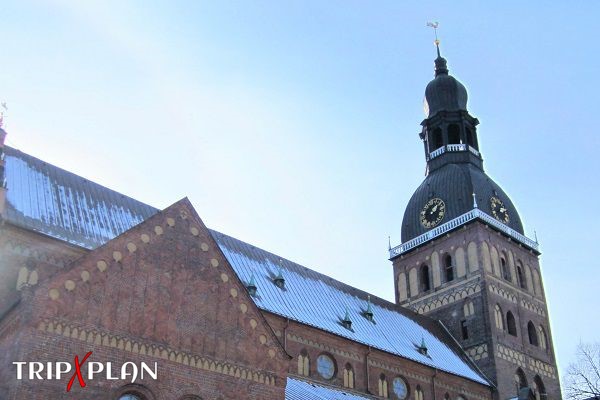
Riga Cathedral, dating from 1211, is the spiritual heart of the city. It is considered to be the largest medieval cathedral in Latvia and the Baltic countries and is generally known as Dome Cathedral. The cathedral is also used as the residence of the Archbishop of Riga. The beautiful tower built in Baroque style is the signature symbol of the cathedral. The height of the tower is 90 meters. The interiors of Riga Cathedral have many works of art, and interesting artifacts from Riga's history are on display at the adjacent Cloister Garden. Like all other old churches in the city, there is a Rooster-shaped weathercock as a symbol of faith and hope in Medieval Europe. The square in front of the cathedral is chosen as the location of various phenomena, fairs and other entertaining events.
The House of Blackheads
The House of Blackheads is a beautiful building in the Old Town center used to be a guild of merchants. The building got its name from foreign merchants called black-headed. The building was destroyed in the bombing of World War II but was rebuilt for the 800th anniversary of Riga in the early 2000s. Now, the house serves as a museum, concert hall and a tourist office. There is also a wine cellar and trade-related exhibitions, and large ballrooms on the upper floors.

According to one legend, about 500 years ago, the Christmas entertainment spread out of the House of Blackheads. When the merchants threw the ornaments on their hands on the pine tree in the square, they unwittingly started a tradition of decorating the Christmas here.
Museum of the Occupation of Latvia
Next to the House of the Blackheads, there is an ominous-looking black, modern cube. The building houses the Museum of the Occupation of Latvia.
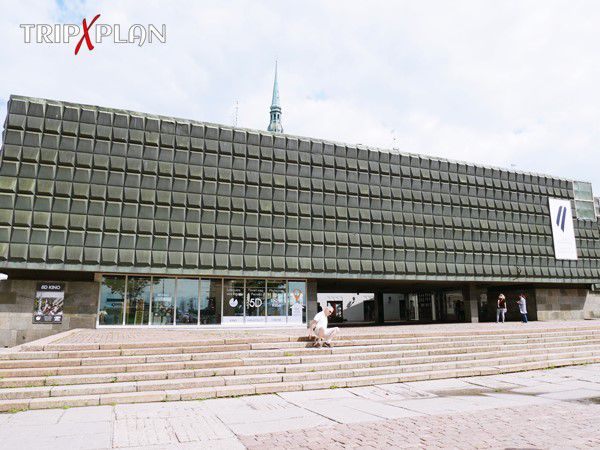
The museum aims to educate visitors on the invasion of Latvia by Nazi Germany before 1940 and the occupation by the Soviet Union between the years 1940-1991. The museum displays various exhibitions describing the persecution of the Latvian people and the war that systematically destroyed the sovereignty of their nation. You can witness the unbearable living conditions of labor camps in Siberia and how Latvians were keeping their souls warm to survive in these frozen lands. There is a store in the museum where you can buy books, movies, postcards and souvenirs.
St. Peter's Church
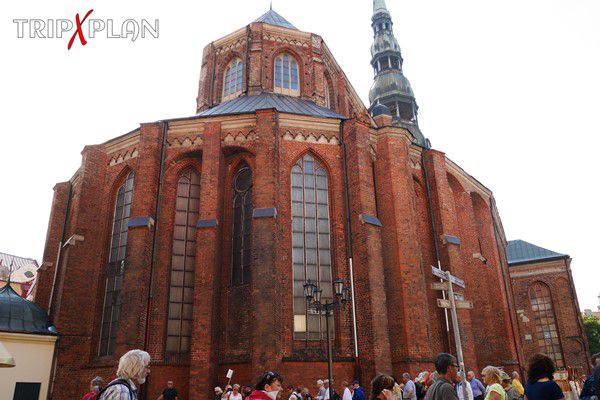
St. Peter's Church, the oldest church in the city, was built in wood in 1209 by the German merchants for the public. The church which was bombed in World War II was rebuilt in red bricks during the times of the Soviet Union. It is possible to see some remains from the first period inside. Today, the church is used not only for religious purposes, but also for concerts and exhibitions. You can take an elevator to the top of its bell tower to admire the views of the city center from above.
Apart from that, you should definitely see the Bremen Town Musicians statue which is located on the right side of the church. Merchants and sailors who came to Riga from Bremen in the 12th century gifted this statue to Riga, which they saw as a sister city.
You can enjoy 2-Hour Walking Tour in Riga Old Town along the narrow streets and discover the history of the city. The famous sights of the city that are visited on this tour include Riga Cathedral, the House of the Blackheads, St. Peter's Church, the Swedish Gate, and Riga Castle.
Powder Tower
Powder Tower, which formerly served as a gunpowder store, was built in the 14th century and gained an important place in the defense of the city. This red-brick tower is 26 meters high, 20 meters in diameter and 3 meters thick.
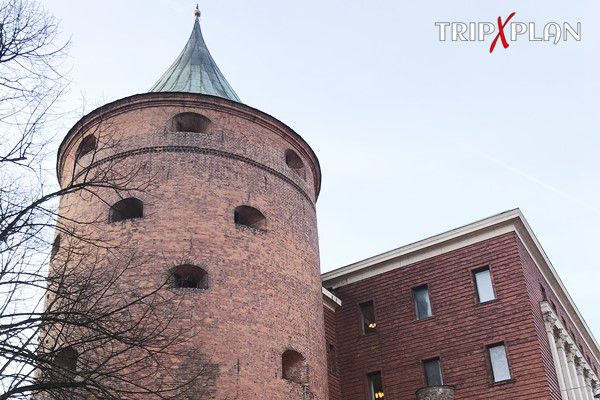
From 1919, it became the Latvian War Museum. Most of the collections in the museum are various war supplies from Latvia since the 14th century, including precious objects such as sand tables, guns, military clothing, and pictures. These exhibits show the historical process of the Latvian people's pursuit of freedom and independence.
Swedish Gate
Swedish Gate was built in 1698 after the conclusion of the Polish-Swedish War, when the Swedish Kingdom took over the city. Swedish Gate was constructed with a mission to connect the city to the houses constructed behind the city walls and barracks. It is the only city gate in Riga that retained its primordial looks. Swedish Gate is considered as one of the most important structures as it is seen as the last symbol of the times when Swedes occupied the town.
Riga Cat House
Riga Cat House is a structure that combines medieval architecture and Art Nouveau elements. The building got its name from the two black cats sitting on the top of the roof.

There is an interesting legend associated with the building. When merchant's request to join the Merchants' Guild was denied, the merchant built 2 black cat figures on the roof of his house and turned their tails and backs to the neighboring Guild house. Later, when the merchant was accepted to the guild, he turned the cats to face towards the Merchants' Guild.
Daugava River
The Daugava River, passing through the city, pours into the Baltic Sea and divides the city into two parts. The Old Town and the most important areas to visit in the city are located on the right side of the Daugava River.
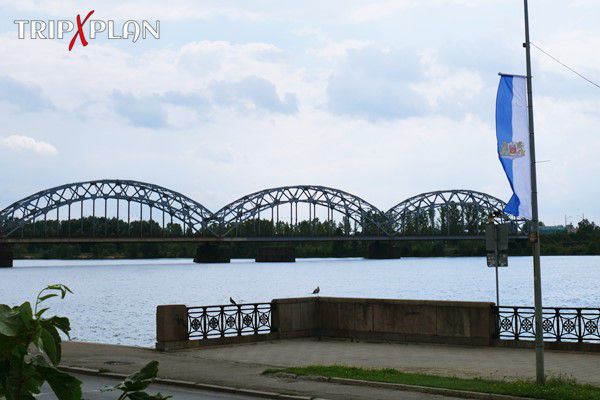
You can take Riga Sightseeing Tour by Canal Boat along the Daugava River and Riga City Canal. You will discover the sights of Riga from a different perspective and see the most popular sights of the historic city center, including the Freedom Monument and Latvian National Theatre.
Freedom Monument
The Freedom Monument, considered one of the symbols of Latvia, was built in the memory for those who fought for the freedom of Latvia and lost their lives during the struggle for independence between 1918 and 1920.
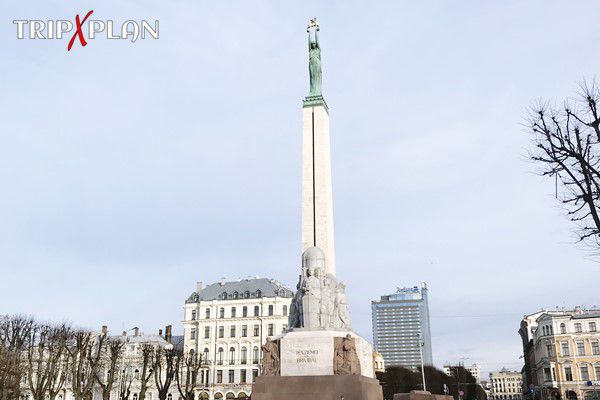
The Freedom Monument rises over 40 meters. On its top, there is a female figure, named Milda, holding three stars above its head symbolizing the three historic regions of Latvia (Kurzeme, Vidzeme and Latgale). There are two-person honor guards standing at the foot of the monument, which symbolizes the sovereignty of Latvia. This place also hosts important social events and ceremonies. From here, it is easy to stroll through the alleys of the Old Town as well as the Art Nouveau streets of the newer center.
Latvian National Opera
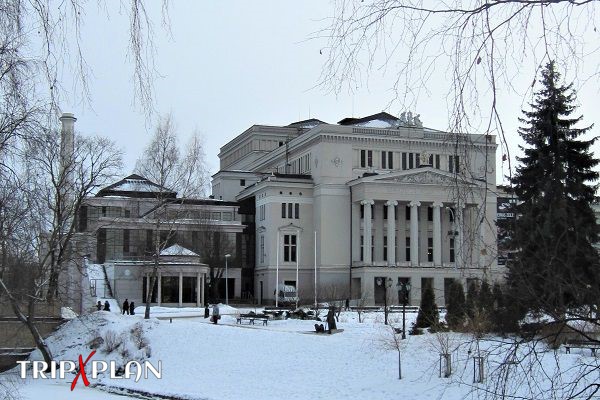
The beautiful building next to the Freedom Monument is the Latvian National Opera. The building itself is a jewel of architecture and history. The Latvian National Opera hosts the Latvian National Ballet (NB), the LNO Choir and the LNO Orchestra. Mikhail Baryshnikov and many other ballet superstars have come from the Riga Ballet School. If you like opera or classical music concerts and shows, you should definitely plan a visit to this opera house.
Laima Clock
"Laima" is one of the most important chocolate producers in the Baltics. Laima Clock, located near the Freedom Monument, was built in 1924 as a gentle way to encourage people not to be late for work. This clock is a popular romantic meeting point in Riga. The famous clock was renewed at the end of 2017.
The Three Brothers
The Three Brothers is a group of three houses, each built in a different century and with a different style. The white-colored Gothic building belongs to the 15th century, the yellow-colored Mannerism building to the 17th century and the green-colored Baroque building to the late 17th century. It gives the chance to observe the original architecture of Riga houses used in the Middle Ages. In one of them, there is a small Latvian museum of architecture.
Riga Central Market
Riga Central Market, which has been included in the UNESCO World Heritage list since 1998, was opened in 1930 and is the best place for shopping in Riga.
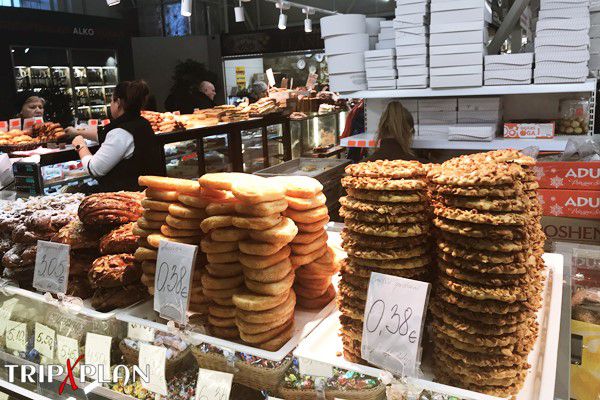
The market is located in the heart of Riga, next to Riga Bus Terminal and Central Train Station, on the bank of the Daugava River a few hundred meters from the Old Town. During World War II, Germans used these arched buildings as zeppelin halls. There are 5 themed market halls with fish, meat, dairy products, fruits and vegetables. Locals come here daily for their groceries, clothing and many other necessities of life. This is the place to explore and enjoy a few moments of local life.
There is a popular Central Market Latvian Food Tour where you can explore Riga through its food, sample authentic produce inside Europe's largest market such as rye bread, smoked meat and hemp butter and learn more about the culture and cuisine.
Riga Castle
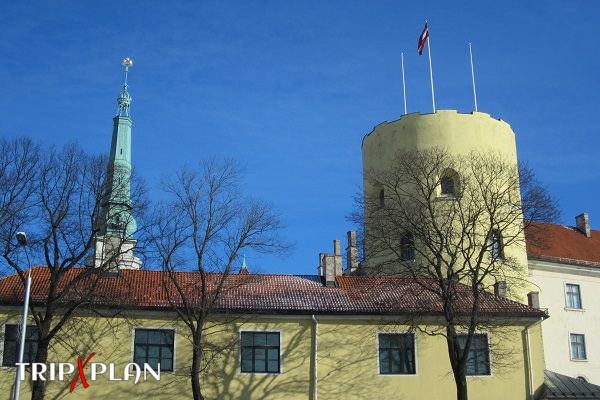
Riga Castle, located on the bank of the Daugava River in the Old Town of Riga, is one of the largest medieval castles in Latvia and has a long history. The castle, which was built in the 14th century, has been rebuilt many times with the addition of new artistic and architectural features. The building, which is quite small compared to other castles, is currently used as the Presidential Office.
Art Nouveau Neighborhood
One of Europe's leading Art Noveau destinations is Riga. The Art Nouveau neighborhood is a part of the city where you can see many buildings in the Art Nouveau style. As the city began to expand in the early 1900s, the newly built buildings were designed according to Art Nouveau, the trend of the period. Today there are about 800 Art Nouveau buildings still standing in Riga.
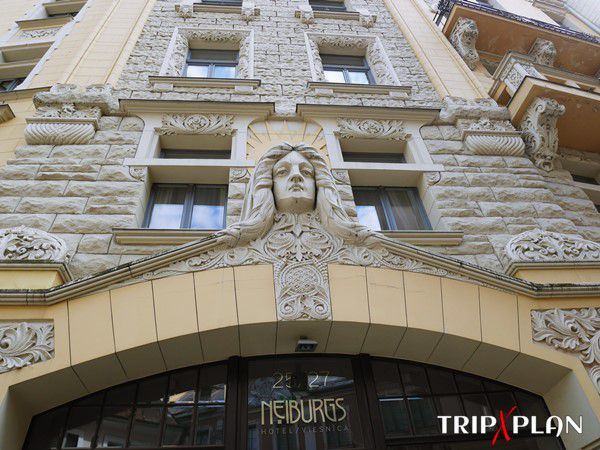
Art Nouveau Walking Tour in Riga is a good opportunity to admire magnificent Art Nouveau architecture and walk down some of Eastern Europe's most beautiful streets.
If you want to take a path to discover some of these artistic and historical structures, you can start from Merkela Street, built in 1909, where you can admire mosaics with drawings of ancient Baltic gods. Continue on to Barona Street, built in 1910, where you will also find the Latvian National Library and artistic works of neo-classical fusion with the art nouveau. Kalpaka Boulevard presents the Latvian Academy of Art, the building built in 1905, with a typically artistic facade. Elizabetes, Strelnieku and Alberta streets that are located slightly outside the historical center, are the main streets to visit for those who want to admire the architectural beauty of Art Nouveau buildings as they are listed on the UNESCO World Heritage List. Even if architecture is not your thing, it is still very much worth a walk through the neighborhood.
Riga Nativity of Christ Cathedral
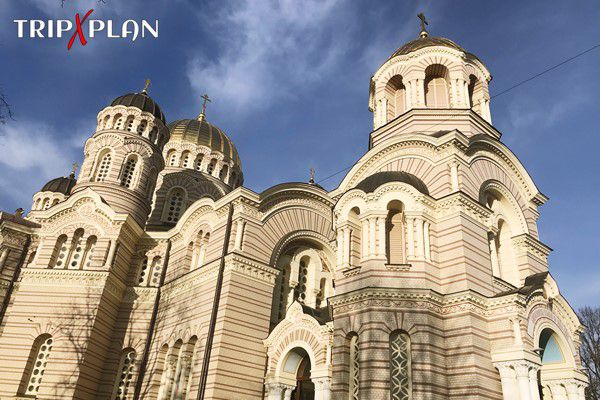
One of the most important examples of the continuing Russian influence in Latvia is Riga Nativity of Christ Cathedral. This Russian Orthodox Cathedral was built in order to serve the Orthodox people living in the city by order of the Tsarist Empire in the 19th century. The building, which is one of the most beautiful examples of Russian architecture, serves as an active church today. A ritual is held in the church every Sunday.
Riga Motor Museum
Riga Motor Museum is the largest and most diverse collection of antique motor vehicles in the Baltic countries. Riga Motor Museum was built with the donations of most Latvian collectors and allows you to see many motor vehicles from different periods of the 20th century closely. There are more than 100 unique antique vehicles with the historical information.
Moscow District
Moscow District is one of the districts of Riga, which starts right next to the Central Square. The district got its name from the fact that a highway to Moscow once passed through it. The area also had a large Jewish community, with synagogues, schools and a cemetery in the district. During the Nazi occupation, Moscow District was turned into a Jewish Ghetto. The area is known as a somewhat infamous place and the atmosphere is still like at the moment after the collapse of the Soviet Union, but if you want to explore, there are beautiful old wooden houses and the cute wooden church in the heart of the area.
Latvian Ethnographic Open Air Museum
Latvian Ethnographic Open Air Museum gives you an opportunity to take a closer look at the 4500-year history of Latvian people. It extends over 90 hectares of forest on the shores of Lake Jugla. You will discover cultural characteristics of 4 regions in Latvia, which consists of Kurzeme, Litzeme, Latgale and Zemgale. By visiting the museum, you can admire traditional houses of Latvian farmers, artisans and fishermen, with exhibits of household and work equipment.
If you want to get to know Riga closer, Riga Private Tour with a Local Guide is recommended. During this tour, the local guide will bring you to tour around the city and share all the tips and tricks that will help you make the most of your visit to Latvian capital.
Hotels in Riga
Riga is a nice base in Latvia where you will spend most of the time. Some of the best places to stay in Riga can be found in the historic heart of town but you can also find great accommodation in other areas with the help of our guide where to stay in Riga.
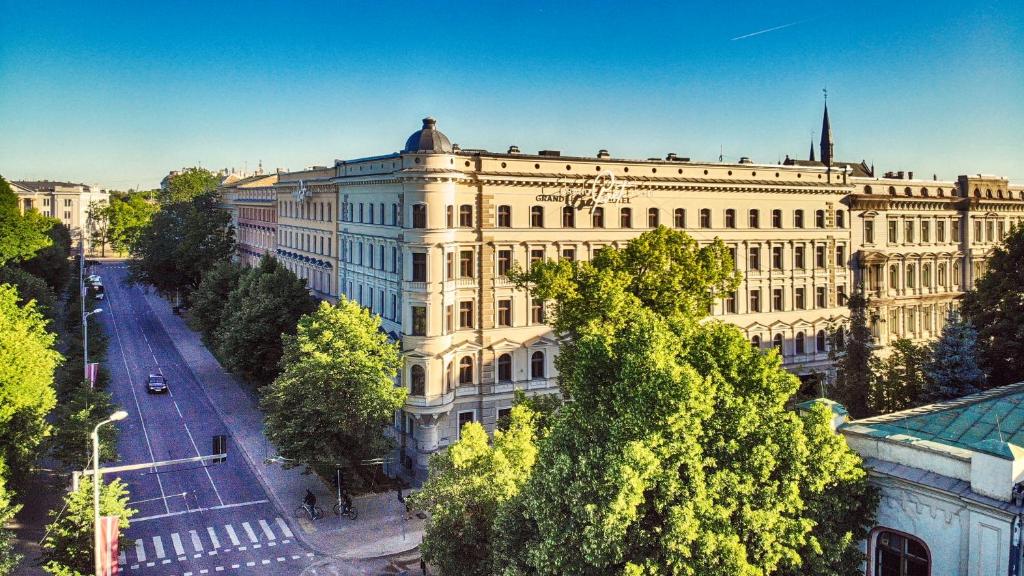
Some of the best rated hotels in Riga:
You can also find more list of the best hotels in Riga for your next getaway.
Tips
Riga has plenty to entertain you at least for a couple days. If you are planning to stay longer, it is recommended to take a short day trip from Riga to its surrounding areas such as the beach in Jurmala, the beautiful old castles of Sigulda or the Ethnographic open-air museum.
The trip to Riga is often combined with the two other Baltic capitals: Vilnius of Lithuania and Tallinn of Estonia.