
Latvia is a travel destination best known for its magnificent capital Riga and the adjacent sandy beach of Jurmala. The country also boasts its Rundale Palace, which is often called the Versailles of the Baltic Sea. This Baltic country has many nice places to visit that can be found in the list of top tourist destinations in Latvia.
Riga
Riga is the capital of Latvia and the most visited city in the country. Often a trip to Riga is combined with the two other Baltic capitals: Vilnius in Lithuania and Tallinn in Estonia.
Riga's history dates back to the 1200s and you can still see the buildings that have survived from that period in the old city area, although they had seen many wars. Riga has a nice old town where you will spend most of your time and most probable will find your best place to stay. The Old Town, called by the inhabitants Vecrīga, resembles medieval times, but much of the architecture was actually rebuilt in the 1990s. The historic center of Riga has been recognized as a UNESCO heritage site.

In city’s medieval Old Town you will find the main sightseeing spots of Riga such as:
- Peter's Church
- The House of Blackheads
- Riga Cathedral
- Cat House
- Swedish Gate
- Three Brothers
- Riga Castle
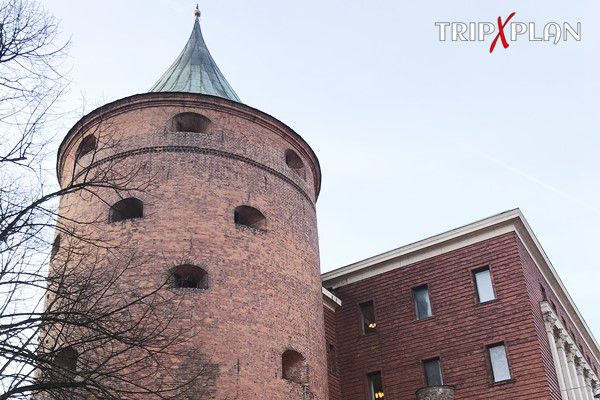
- Powder Tower
The capital of Latvia not only has the beautiful historic old town but also several romantic parks and a large number of Art Nouveau buildings, thanks to which Riga has also been called the Paris of the Baltics.
One of the most scenic parks in the city is the park around Basteiberg (Bastion Hill) with nice streams and small bridges.
Another part of the city, known as Centrs, is home to over 800 Art Nouveau buildings that are surprisingly well preserved. You should definitely make a stop at city’s Central Market, where you can find fish, meat, dairy products, fruits and vegetables.
If you are curious about Latvian history and culture, the Latvian Ethnographic Open Air Museum is an incredible option. There is a collection of traditional houses, and people wandering in traditional clothes add a distinct authentic atmosphere.
Places to visit in Riga are quite numerous if compared to the size of the city and the most important of them are detailed in the list of Riga top attractions that can be very useful for planning your trip. Riga has plenty to offer to entertain yourself for a few days and if you will decide to stay longer than 2 to 3 days, there are still many sites around the city that are definitely worth visiting.
If you are wondering where to stay in Riga, our guide to Riga’s best areas and the best hotels located in each area will help you fully enjoy your stay.
Jurmala
In summer, Latvia is also suitable for a beach holiday. With its 33 km long beach, Jurmala is one of the most important holiday spots and an important sea resort city of Latvia. Located just 25 km away from Riga, Jurmala has nice sandy beaches and romantic tree houses in the forest. Many tourists from neighboring Russia prefer to spend their holidays here.
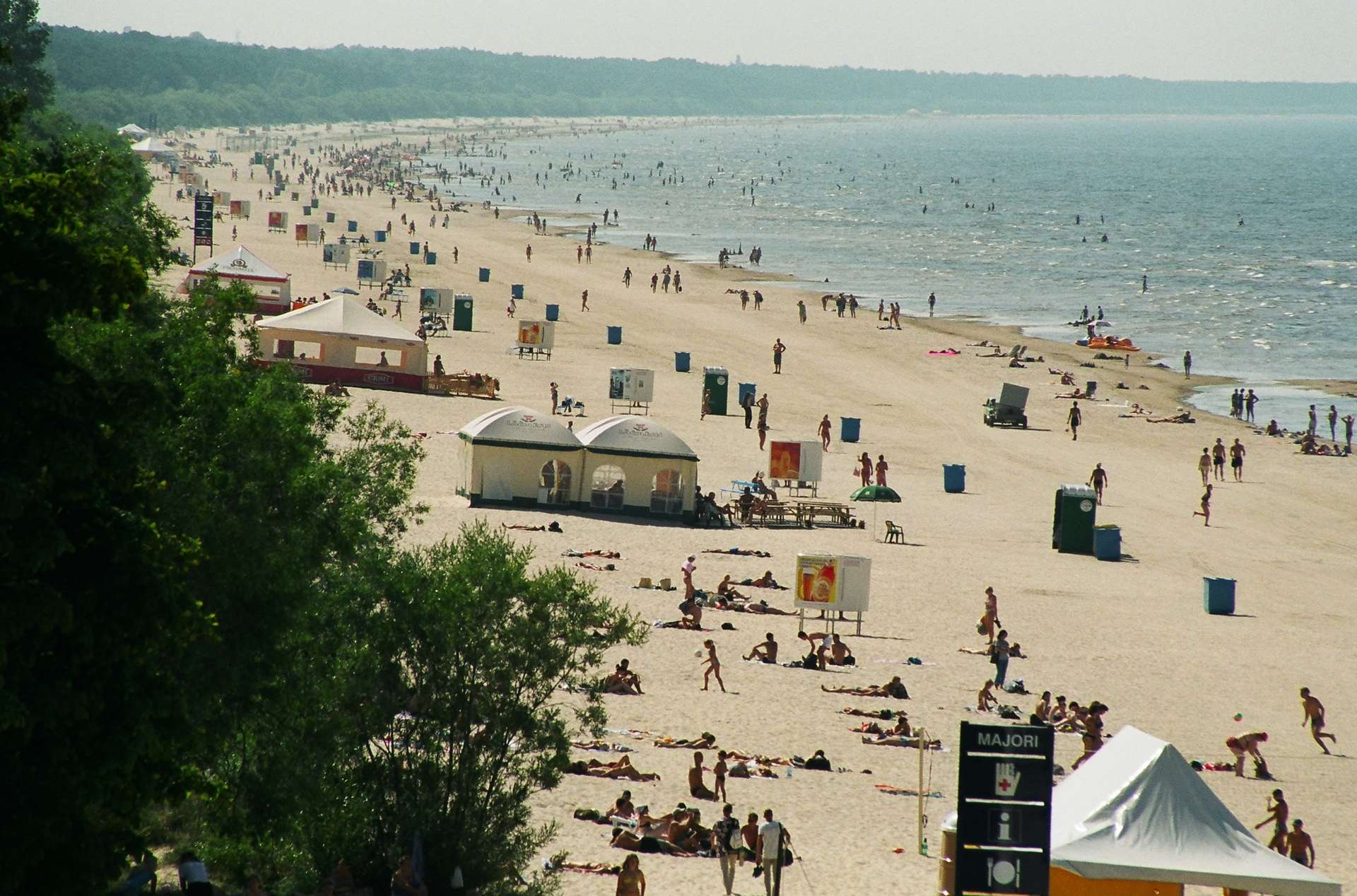
It is easy to visit Jurmala on a day trip from Riga. There are both train and minibus services between these two cities. To make your visit easier, you can take a Half-Day Jurmala Tour to enjoy the trip to Jurmala with its white sand beach, pine forests and iconic wooden houses.
However, if you have spent few days in Riga, we would definitely recommend you to spend a night in Jurmala to feel its special atmosphere on warm summer nights. Jurmala is home to some of the most famous hotels of the Baltic countries.
These are especially nice and really well-rated hotels in Jurmala:
Boutique Hotel Light House Jurmala

Sigulda
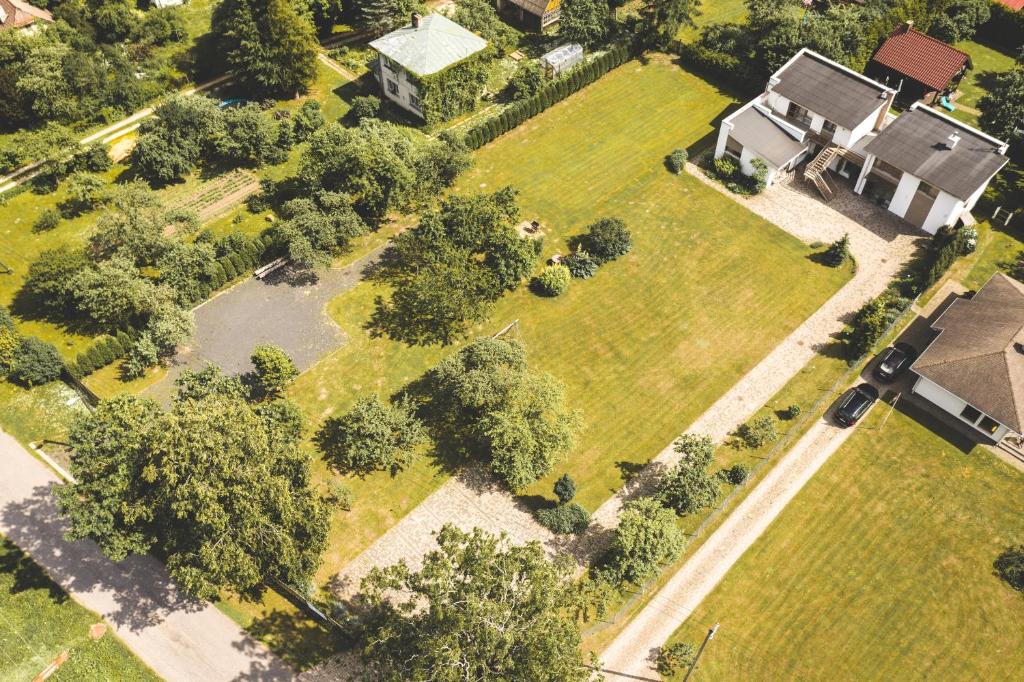
Sigulda is located on the eastern edge of Riga region, 66 km away from the capital city, and is well connected by public transportation so it takes just a bit more than an hour to get there from Riga. Sigulda is the highest place in the country reaching the height of 300 meters. The historic city Sigulda, located in the Gauja River Valley, is considered to be the green heart of Latvia.
Named as the Swiss of Latvia thanks to its beautiful scenery created by Gauja Valley and Gauja River running through Gauja National Park, which was founded in 1973 and spans over 90,000 hectares. Most of Latvia is underdeveloped and Gauja National Park is a good example where you can really get in touch with nature. In the national park you will find hiking trails, observation points, recreation areas, camping facilities and cafes.
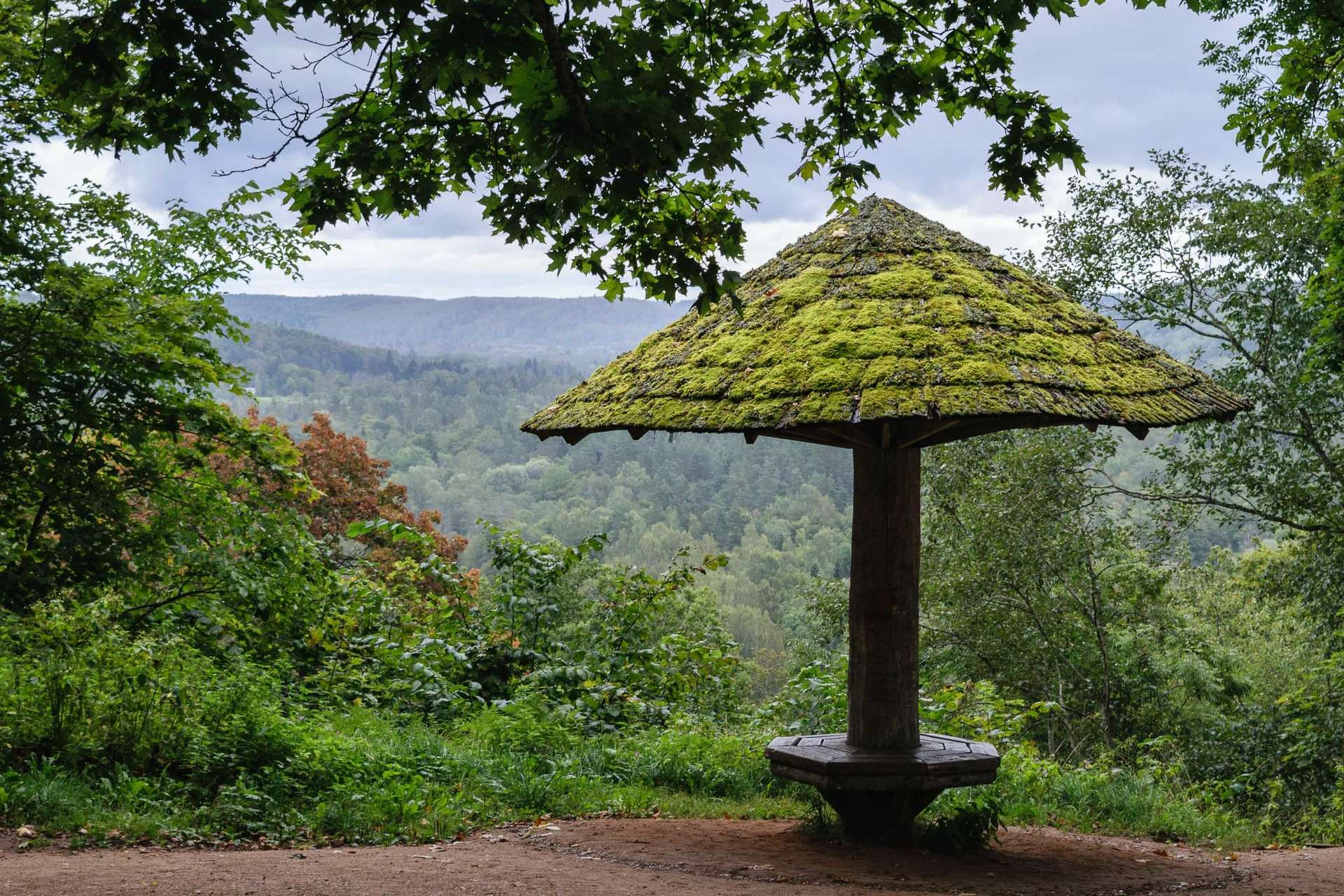
As Sigulda is an interesting city for nature lovers where you can hike through mountains, valleys, cliffs, and caves, you can take Sigulda Hiking Tour to visit popular attractions of Sigulda, Krimulda, and Turaida and enjoy the natural beauty of this region.
Sigulda is one of the most beautiful cities in Latvia and boasts many historical sites. Sigulda also offers some amazing architectural features that need to be discovered. Sigulda Medieval Castle (Turaida Castle), the most beautiful castle in Latvia built in 1207 by Livonian Knights, remains the main symbol of the city. Unfortunately, the castle, once a magnificent protection facility, was partially damaged, and now tourists can see only part of the wall, towers and a small square. New Sigulda Castle was built in Neo Gothic style. The Neo-classical Town Hall in front of the castle was built in the 18th century. The building belongs to the Krapotkin family. Apart from that, Gutmana Cave is located within walking distance from the castle. This is the largest cave in Latvia with about 15-20 meters deep. There are campsites and canoe rentals for hikers.
It takes 75 minutes by train to reach Sigulda from Riga and the train ticket price is 2.50 Euro. The journey by bus takes 1 hour 15 minutes and ticket prices vary between 2.20-3.00 Euro. There is also a train to Sigulda from Valga, Estonia.
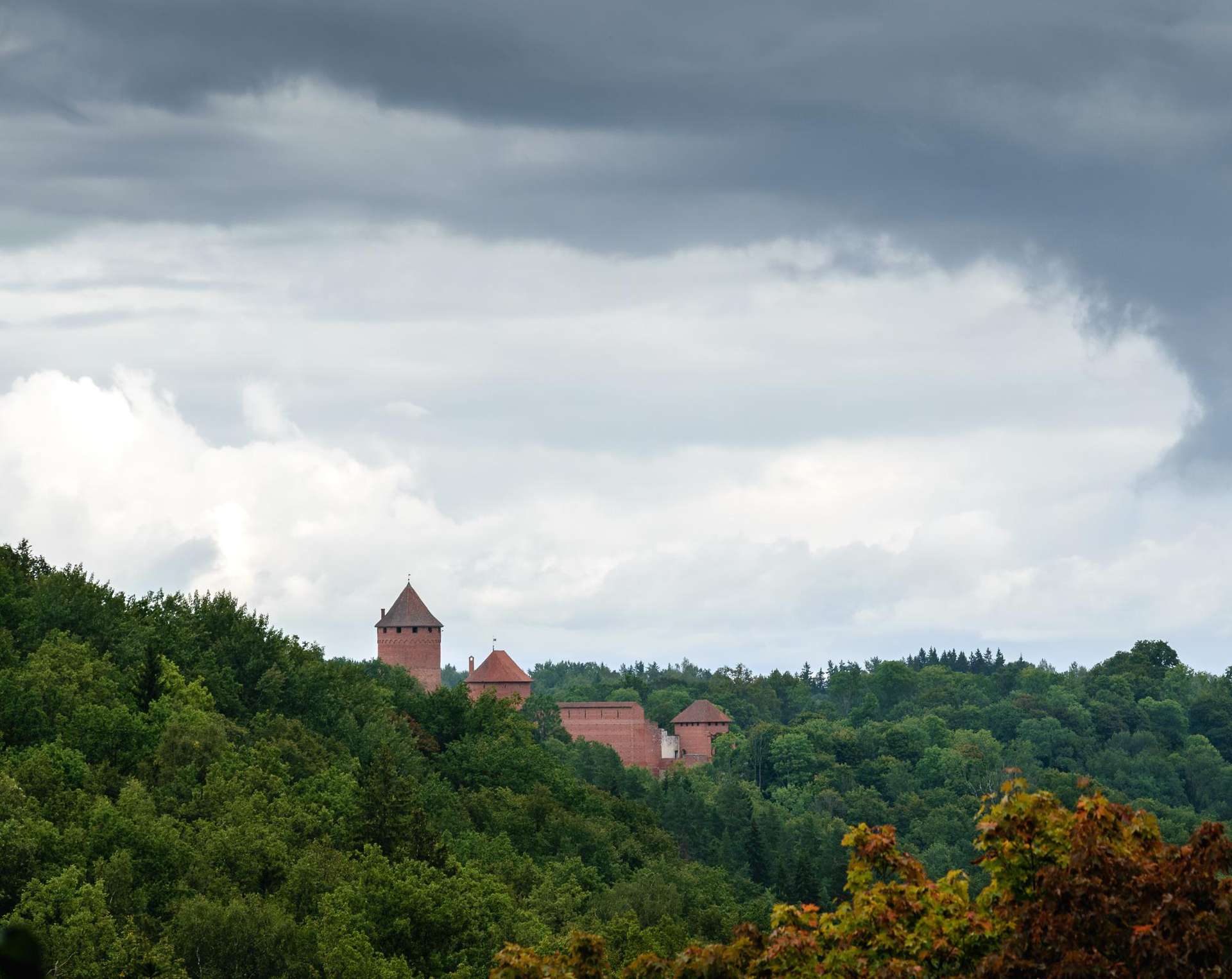
You can join Sigulda Day Tour to explore Gauja National Park by visiting Sigulda Castle, Gutmana Cave, the famous Turaida Museum, and ride the aerial cableway.
Excellent places to stay in Sigulda:
Liepaja
Liepaja is the third largest city in Latvia with a population of 70,000 people. The city is located in the southwestern part of Latvia, on a stretch of land between the Baltic Sea and the Liepaja Lake that are connected by the Trade Canal. While one half of the city was its traditional center, the northern half is better known as Karosta. During the Soviet era, Liepaja was a closed city and served as the main base for the Baltic Navy. Liepaja and its suburbs are still filled with the Soviet spirit and there is Orthodox Church rising in the middle of the elemental houses. The coastal city, known as the “birthplace of the wind”, has a mixed architecture ranging from wooden houses to Art Nouveau style and Soviet blocks.
Liepaja is also covered with a 6.5-kilometer-long beach and large green areas. Most visitors come to Liepaja for its gorgeous white sand beaches. Although Vecliepaja and Dienvidrietumi are the two most popular beaches, they are rarely crowded. Liepaja is a peaceful place for a relaxing beach holiday.

Some call the city "the capital of music" as many Latvian musicians were born in Liepaja. This city is also famous for theater, art, music and cultural events, some of which are held on the beach. There is also the university that brings youth to Liepaja.
There are several ways for getting to Liepaja from Riga. The trip by bus from Riga to Liepaja takes 3.5 hours and the ticket price is 9 Euro. Liepaja is also connected with bus routes from Ventspils and Kuldiga in Latvia as well as buses from Klaipeda and Palanga in Lithuania. The train station of Liepaja is set up in the same building as the bus terminal in the Sienatirgus district. The train from Riga to Liepaja departs at 18:30 and from Liepaja to Riga at 06:00. Train ticket price for this route is 9 Euro. There is also a ferry to Liepaja from Travemünde in Germany.
Some of the best rated accommodations in Liepaja:
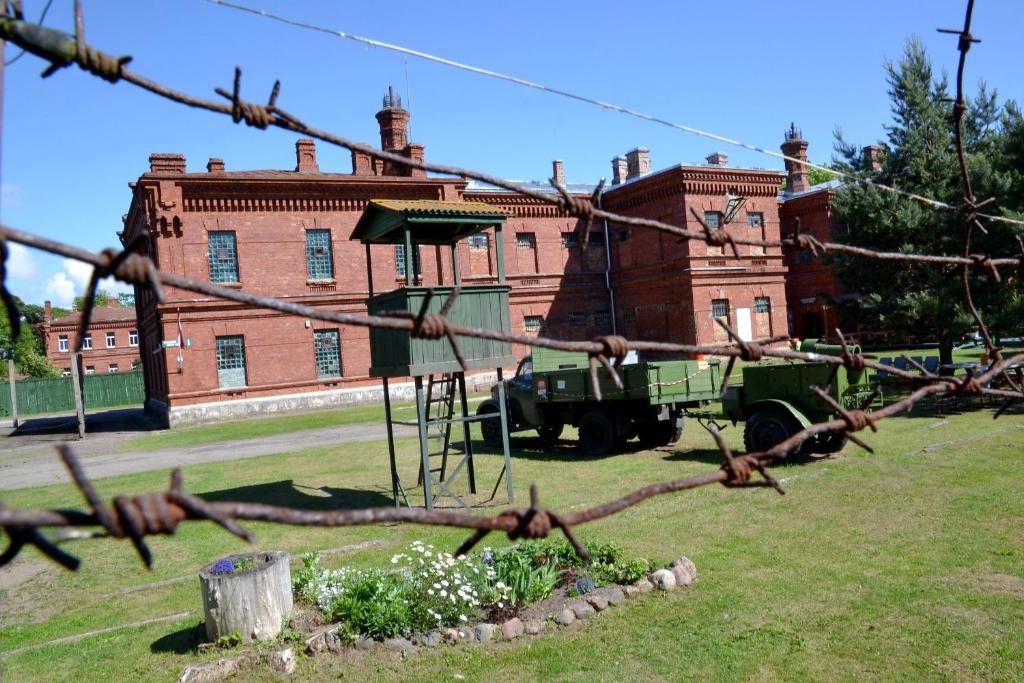
There is also an old prison in Karosta, which now serves as a hotel. By staying at Karosta Prison Hotel, you can try out role-playing prison life with prison food and bullying of guards. However, this hotel is located quite out of town.
Cesis
Located 90 km from Riga, Cesis is one of the most important tourism cities of Latvia, attracting visitors with its parks, wooden houses, castle and unique culture. The historical and small city of Cesis has an impressive landscape with forests and the Gauja River running through the city.
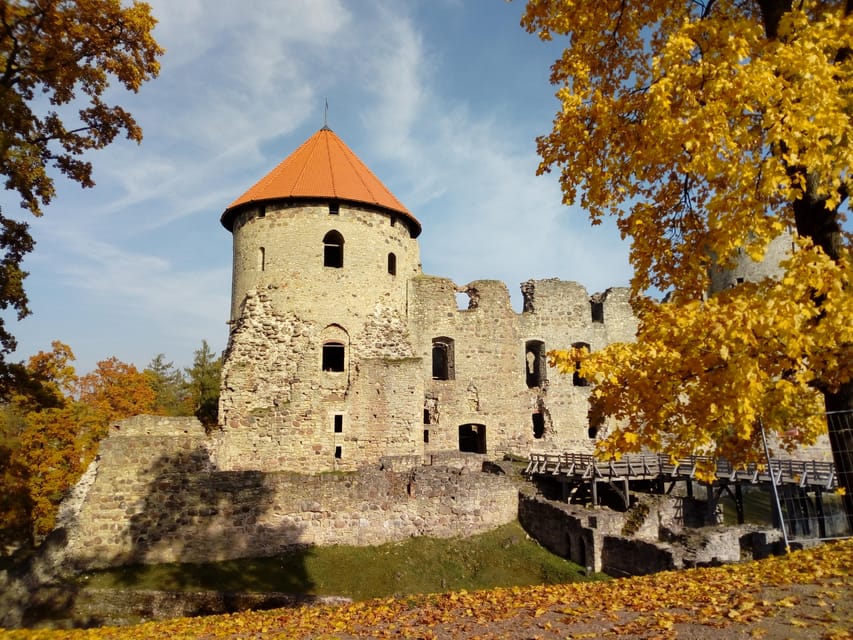
The most important place to visit here is Cesis Castle, which is the symbol of the city. In fact, Cesis has two extraordinary castles that stand side by side. The first is the original Cesis Castle, founded in the 13th century and mostly demolished. Next door is the New Cesis Castle, built in the 18th century. The new castle is very beautiful and surrounded by wonderful scenery.
It is quite comfortable to visit Cesis since all attractions are close to each other and you can easily walk between them. There are boat trips and concerts in Kale Park (Cesu Pils Parks) in summer and skating activities in winter.
You can get to Cesis by taking a bus or train from Riga and the journey should take about two hours. The city is on the same route that is used for traveling to Sigulda. If you will be taking a train, be noted that it takes about 20 minutes to walk from the train station to the center. From Cesis, there are also trains running to Estonia.
To make your trip to Cesis easier, you can take this Cesis and Sigulda Day Trip with Hotel Transfers that includes the main sights to see in the countryside of Latvia such as Sigulda Castle and Cesis Castle.
There are several nice accommodations in Cesis, next to the castle:

Seda
If you will continue your journey further northeast from Cesis, you will arrive in Seda, a model city of the Soviet era - one of the special sights of Latvia.
Seda, built in 1952, is a town in the Valka district of Latvia. Seda is located in the middle of the forest, not far from the Estonian border. On the map it looks like a small town built in the middle of nowhere. It is almost a two-hour drive from Riga, while from Tartu on the Estonian side it can be reached in an hour and a half.
Seda has become a unique but little-known pearl of Latvia's cultural history. This is the only settlement in the north of Latvia, where the majority of the population are non-Latvians but Russian-speaking. This is due to the fact that in Soviet times, workers from other Soviet republics, mainly Russians, Ukrainians and Belarusians, came here to work at the local peat factory.
Rundale Palace (Rundales pils)
Rundale Palace is located 80 km south of the Latvian capital Riga. Rundale Palace is a beautiful baroque building built in the 18th century. Rundale Palace is a spectacular revelation that is called Versailles on the Baltics.
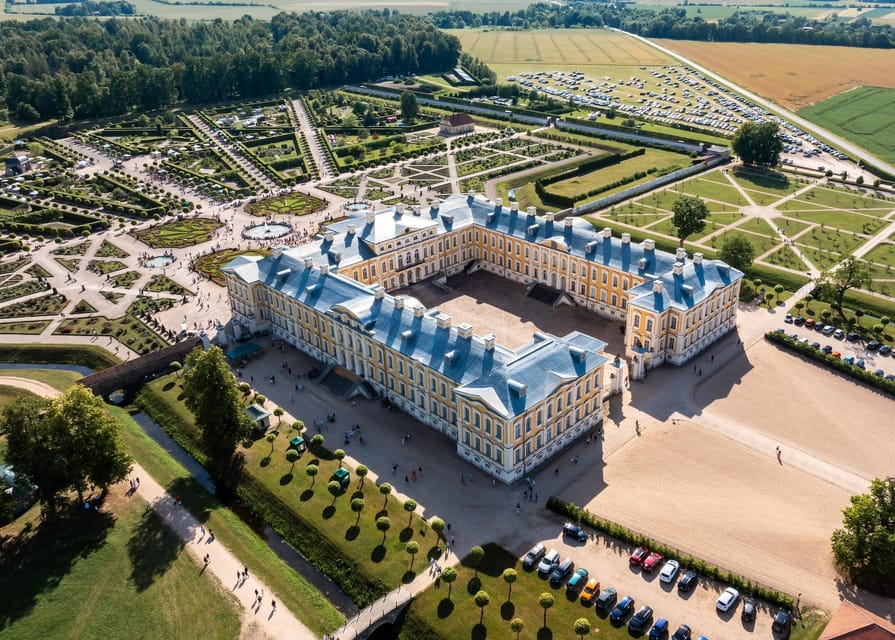
The rooms of Rundale Palace are filled with crystal chandeliers, antique beds and portraits of ancient celebrities. There are large halls and galleries on the east side, the rooms of the Duke of Courland in the central block, and the duchess rooms on the west side. The palace has been turned into a museum and is open to tours. Visitor can see collections of magnificent old furniture, mirrors, paintings and other items. There is also a rich collection of vases and sculptures made of china. Classical music concerts are also held in the palace.
The easiest way for getting to the palace from Riga is by joining a tour. This Hill of Crosses, Rundāle Palace, & Bauska Castle Tour from Riga will bring you to discover the restored baroque palace and the park of the Duke of Courland and enjoy walking through the wonderful parks and flower gardens.
Other Palaces in Latvia
Jelgava Palace or Mitava Palace: The largest Baroque-style palace in the Baltic States. It is the former residence of Courland and Zemgale dukes. Today, Jelgava Palace houses the third largest university of Latvia, Latvian University of Agriculture.
Mezotne Palace: A manor house located in Mezotne municipality of Bauska district in the Semigallia region of Latvia. The palace is one of the most outstanding examples of Classicism architecture in Latvia.
Bauska Castle: A complex consisting of the ruins of an earlier castle and a later palace on the outskirts of the Latvian city of Bauska.
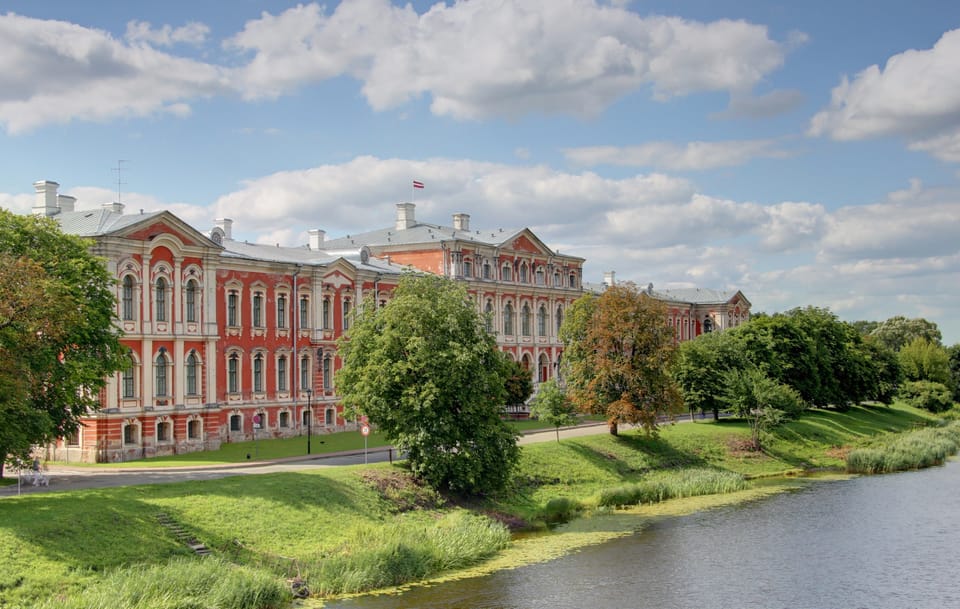
You can visit these palaces by joining Latvian Palaces and Medieval Castles Private Tour. While on this tour you will see Latvia’s landmarks including Rundale Palace, Mezotne Palace, Bauska Castle, and Jelgava Palace.
Ventspils
Ventspils is a cute little town with less than 40,000 inhabitants, located on the shore of the Baltic Sea. The city is named after the Venta River. One of the main attractions of the city is its clean and long white sand beach in the western part of the city, which is extremely popular in summer.
The trip by bus to Ventspils from Riga takes 3 hours. The city’s port also receives ferries from Sweden (Nynashamn / Stockholm), Germany (Travemünde and Lübeck) and Russia (St. Petersburg).
From Ventspils you can make an excursion, for example, to Kolka, which is located right at the northern tip of the Latvian coast. The area is protected as a national park and preserved in its natural state. Not far from there, there is Cape Kolka, the most distinct cape in Latvia, and it is the place where the Baltic Sea (the Big Sea) and the Bay of Riga (the Little Sea) crash together. It has amazing views over the water and the white sand dunes.
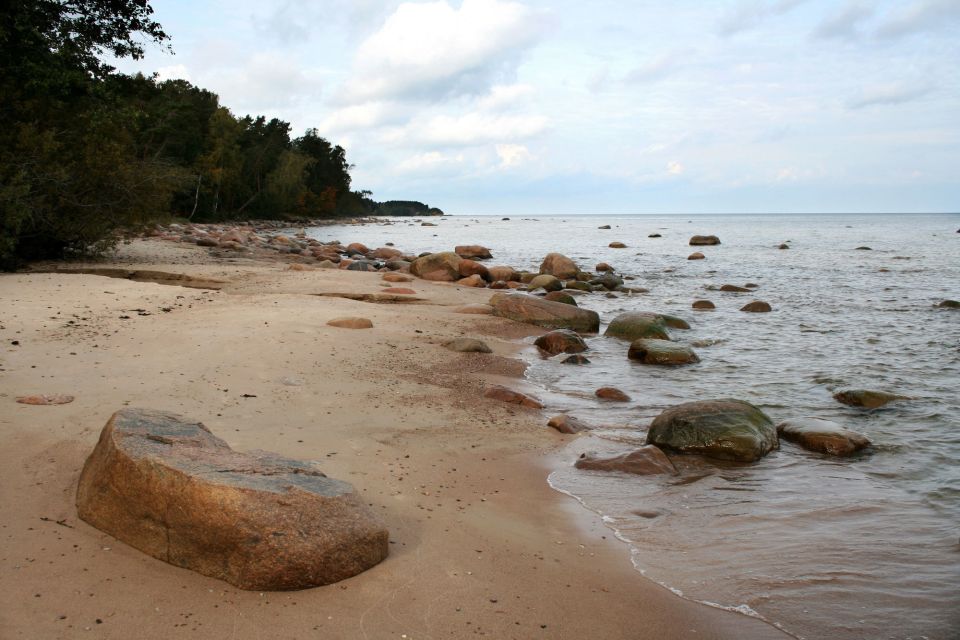
Even if you have no intention of visiting Ventspils, you can visit Cape Kolka on the Baltic Sea Coastal Scenery Tour from Riga as on this tour you can head to the magical region of Kurzeme to explore the coastal scenery, beaches, trails, and charming villages.
Daugavpils
Daugavpils, the second largest city in Latvia with a population of less than 90,000, is located close to the border with Lithuania and Belarus, right in the southeast corner of the country. Its architecture, people and culture are diverse as the city in its history was ruled by Poland, Sweden, Russia and Germany.
In the heart of the city center, there is a pretty pedestrian street Rigas iela, which starts from the railway station. You can see the 19th century architecture in the center. There is Daugavpils Fortress, which is a remarkable landmark, and Baznicu kalns (Church Hill) with 4 different churches standing next to each other.
Latvia’s two largest cities are quite well connected. Latvian Railways run 4 trains per day between Riga and Daugavpils. The bus from Riga Bus Terminal to Daugavpils departs every two hours. There are also trains and buses connecting the city with Russia, Belarus and Lithuania.